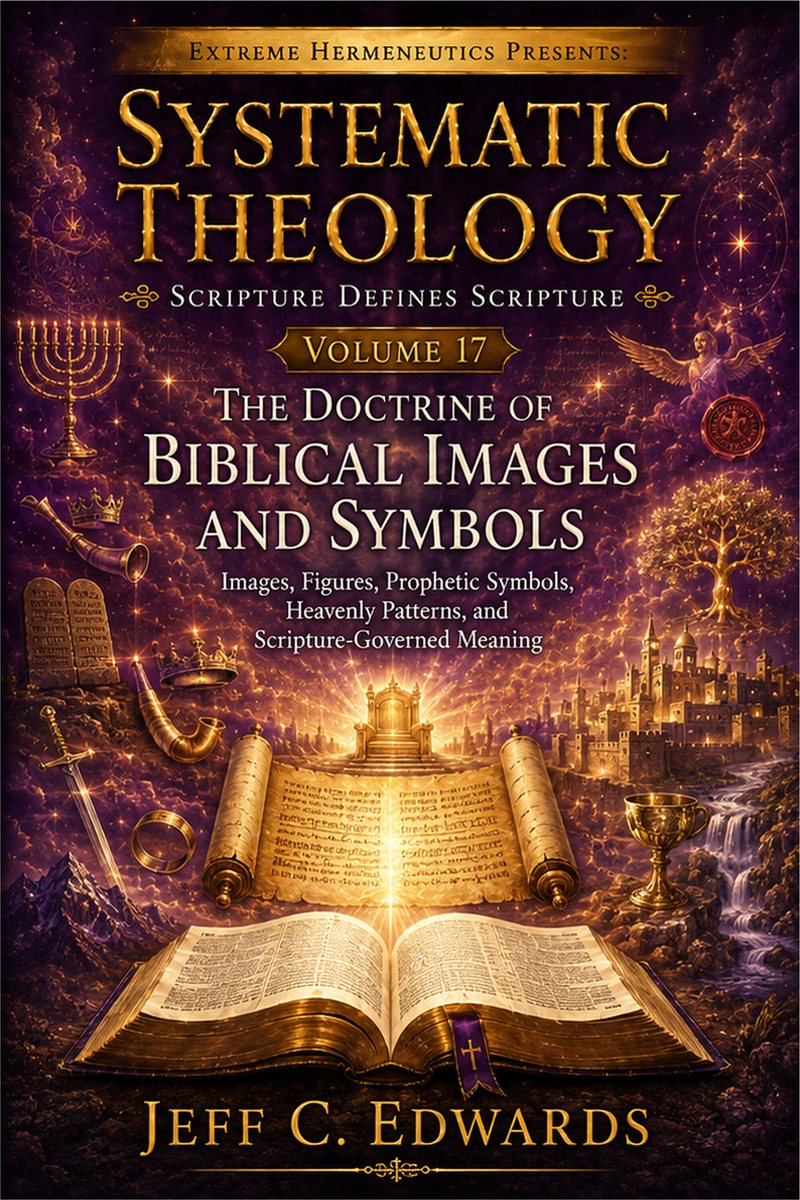
THE PUBLISHED CHAPTER
Chapter 22 — Books, Scrolls, and Records Before God
The Bible is a written revelation.
God speaks, commands, remembers, records, judges, and preserves testimony. He gives tablets to Moses, writes His law, commands kings to copy it, sends prophets with written words, gives scrolls to Ezekiel and John, and closes Scripture with a book that warns against adding to or taking away from what He has spoken.
Yet Scripture also speaks of books and records that belong to heaven itself.
There is a book of remembrance before God. There is a book of life. Daniel sees books opened before the Ancient of days. Revelation sees books opened at the final judgment and another book opened, which is the book of life. John sees a sealed scroll in the right hand of Him who sits upon the throne, and only the Lamb is found worthy to open it.
These images must be read carefully. A book in Scripture may be a literal written document, a covenant witness, a prophetic scroll, a record of remembrance, a judicial record, or a visionary image of God’s perfect knowledge and sovereign purpose. The reader must not force every biblical book into one meaning. Nor should he reduce these images to mere literary decoration.
God’s books declare that nothing is forgotten before Him.
His people are not forgotten. Their faithfulness is not forgotten. Their suffering is not forgotten. Their names are not lost. Their prayers are not unheard. At the same time, rebellion is not forgotten. Secret sin is not hidden. False worship is not overlooked. The works of men are known before the Judge of all the earth.
The books of Scripture reveal a God who speaks truly and remembers perfectly.
The Written Word of God
The first and most basic use of writing in Scripture concerns the Word God gives.
The Lord wrote the Ten Commandments upon tablets of stone. Moses received the testimony at Sinai as the written covenant witness of God’s will for Israel. The tablets did not contain every truth God had ever revealed, but they stood at the center of Israel’s covenant life. The people were not left to invent righteousness for themselves. God had spoken.
The written law established an objective standard.
Israel could not claim ignorance when the Lord had given His commandments. Kings were commanded to write for themselves a copy of the law and read it all the days of their lives, so that they might learn to fear the Lord and keep His words (Deuteronomy 17:18–19). Parents were commanded to teach the words of God diligently to their children. The law was to be written upon the doorposts and gates.
Writing preserved testimony.
This does not mean the written word replaced the living God. Israel was not called to worship parchment, stone, ink, or scrolls. But the written Word of God guarded the people against a religion built upon changing memory, personal preference, and human invention. What God had said could be read, taught, obeyed, and tested.
The same principle continues through the prophets and apostles. Jeremiah dictates a scroll. Habakkuk is told to write the vision plainly. Luke writes an orderly account so that Theophilus may know the certainty of the things he has been taught. John writes that those who read may believe that Jesus is the Christ, the Son of God, and that believing they may have life through His name.
The written Word does not make God distant. It gives His people a stable witness to His truth.
Scrolls as Prophetic Testimony
The prophets often receive scrolls or written words in visions.
Ezekiel sees a hand stretched forth toward him, holding a roll of a book. The roll is written within and without with lamentations, mourning, and woe. He is commanded to eat the scroll, and it becomes sweet as honey in his mouth before he is sent to speak God’s words to Israel (Ezekiel 2:9–3:3).
The scroll in Ezekiel’s vision is not merely a prop. It represents the message God has given. The prophet must receive that message before he can proclaim it. The scroll is full of judgment, yet it is sweet because it is the Word of God. The prophet does not create the message. He receives it, takes it inwardly, and speaks it faithfully.
Zechariah sees a flying roll, written on both sides, proceeding as a curse against theft and false swearing in the land (Zechariah 5:1–4). The image reveals the active and searching judgment of God’s Word against sin. What has been spoken by God does not remain harmless ink on a page. His Word enters the house of the guilty and exposes what men have tried to hide.
John likewise receives a little book in Revelation 10. He is told to take it and eat it. In his mouth it is sweet as honey, but in his belly it is bitter. The command echoes Ezekiel. John must receive the prophetic message God gives him, including both its sweetness and its burden, before speaking further concerning peoples, nations, tongues, and kings.
The scroll imagery teaches that prophecy is received revelation.
The prophet does not invent the word. He does not soften it according to public demand. He does not treat judgment as optional because it is difficult. The scroll belongs to God, and the prophet must speak what God gives.
The Book of Remembrance
Malachi speaks of a book of remembrance written before the Lord.
The setting is a time of widespread complaint and spiritual weariness. Some had said that it was vain to serve God. They looked at the prosperity of the wicked and wondered whether faithfulness had any value. Yet Malachi says, “Then they that feared the LORD spake often one to another: and the LORD hearkened, and heard it, and a book of remembrance was written before him for them that feared the LORD, and that thought upon his name” (Malachi 3:16).
The image is tender.
God does not need a physical ledger in order to remember. He does not suffer from forgetfulness. The book of remembrance communicates His perfect awareness of the faithfulness of those who fear Him. Their quiet conversations, reverence, endurance, and thoughtfulness toward His name are not lost.
The verse is especially encouraging because it concerns people who may appear unimportant in the public movement of history. They are not kings, armies, prophets before crowds, or powerful officials. They are those who fear the Lord and speak often to one another about Him.
God hears.
The book of remembrance should not be confused with the book of life. Scripture gives different books and records different functions. The book of remembrance emphasizes God’s care for the faithful and His knowledge of their service. The book of life concerns those who belong to the life and kingdom of God.
The common truth is that God does not forget His own.
The Book of Life
The book of life appears in several key passages.
Moses pleads for Israel after the sin of the golden calf and says, “Yet now, if thou wilt forgive their sin—; and if not, blot me, I pray thee, out of thy book which thou hast written” (Exodus 32:32). The Lord replies, “Whosoever hath sinned against me, him will I blot out of my book” (Exodus 32:33).
The passage must be handled within its own covenant setting. Moses is interceding for Israel after grave rebellion. The language reveals the seriousness of sin and the reality that God knows those who stand under His judgment. It should not be used in isolation to construct a complete doctrine of salvation apart from the wider testimony of Scripture.
Daniel speaks of a future time of trouble in which those found written in the book will be delivered (Daniel 12:1). Christ tells His disciples to rejoice because their names are written in heaven (Luke 10:20). Paul speaks of fellow laborers whose names are in the book of life (Philippians 4:3). Revelation repeatedly identifies the book of life with those who belong to the Lamb.
The book of life therefore portrays divine knowledge, belonging, and final acceptance before God.
It does not mean the redeemed are merely entries in a heavenly database. The image communicates personal certainty. God knows His own. Their salvation is not sustained by human memory, institutional record, or earthly reputation. Their names are known before the throne.
Revelation calls it the Lamb’s book of life. That phrase gives the image its center. The names belong to those identified with the Lamb who was slain. The book is not a reward for self-made righteousness. It belongs to the redemption God has accomplished through Christ.
Names Blotted Out and the Promise to Overcomers
Revelation 3 contains a promise that must be read with care.
To the church at Sardis, Christ says, “He that overcometh, the same shall be clothed in white raiment; and I will not blot out his name out of the book of life” (Revelation 3:5).
The verse is a promise of assurance, not an invitation to fear that Christ will casually erase the names of His faithful people. The overcomer in Revelation is the one who belongs to Christ through faith. John later writes, “For whatsoever is born of God overcometh the world” (1 John 5:4).
The promise is given to a church with a reputation for life but a reality of spiritual death. Christ calls the congregation to wakefulness, repentance, and faithfulness. Those who truly belong to Him will not be forgotten, erased, or abandoned before God.
The wording also stands against mere outward profession. A church may possess a name before men while remaining spiritually dead. A person may identify publicly with Christianity while never belonging to Christ in truth. The book of life is not controlled by human membership rolls, public reputation, or religious language.
Christ knows those who are His.
The promise gives comfort to the faithful and warning to the self-deceived.
Books Opened Before the Ancient of Days
Daniel 7 moves from earthly beasts and arrogant rulers to the throne of heaven.
The prophet sees the Ancient of days seated in judgment. His garment is white as snow, His throne is like the fiery flame, and a fiery stream issues from before Him. Thousands upon thousands minister unto Him, and ten thousand times ten thousand stand before Him. Then Daniel says, “the judgment was set, and the books were opened” (Daniel 7:10).
The scene is judicial.
The books are not described as ordinary earthly documents. They belong to the heavenly courtroom. They reveal that judgment is not arbitrary. God does not judge from incomplete knowledge or unreliable testimony. He knows the deeds, words, rebellion, and claims of the kingdoms that rise against Him.
The beast may speak great words. Kings may exercise terrifying power. Empires may appear invincible. But the books are opened before the Ancient of days.
Nothing is hidden.
Daniel does not tell the reader the titles of every book or the precise contents of every record. The point is not to satisfy curiosity about heavenly administration. The point is that history comes before the Judge who knows all things and renders perfect judgment.
This image prepares the reader for Revelation 20, where books are opened before the great white throne. The God who judges in Daniel is the God who judges at the end of the age. The same divine knowledge stands behind every verdict.
The Scroll in the Right Hand of God
Revelation 5 opens with one of Scripture’s most majestic scroll scenes.
John sees Him who sits upon the throne holding a book in His right hand, written within and on the backside, sealed with seven seals. A strong angel proclaims with a loud voice, “Who is worthy to open the book, and to loose the seals thereof?” (Revelation 5:2).
No man in heaven, earth, or under the earth is found worthy to open the book or look upon it. John weeps because no one is found worthy. Then one of the elders tells him not to weep: “Behold, the Lion of the tribe of Juda, the Root of David, hath prevailed to open the book, and to loose the seven seals thereof” (Revelation 5:5).
John then sees a Lamb standing as though it had been slain.
The scroll has been understood in several ways: as the title deed of the earth, the decree of God’s judgment, the unfolding of redemptive history, or the divine plan by which God brings His purposes to completion. Scripture does not give a single sentence that labels the scroll in those exact terms. The safest conclusion is that it contains the sovereign purposes of God for the judgment of evil, the vindication of His people, and the consummation of His kingdom.
The central truth is explicit.
Only the Lamb is worthy to open it.
The worthiness of Christ is not merely royal status. He is worthy because He has prevailed. Revelation’s worship explains that He was slain and redeemed people to God by His blood out of every kindred, tongue, people, and nation. His authority to open the scroll is connected with His redemptive victory.
The scroll belongs in the right hand of God because history belongs under His sovereign rule. The Lamb opens it because redemption and judgment reach their appointed fulfillment through Him.
The Seven Seals and the Unfolding of Judgment
As the Lamb opens the seals, Revelation’s judgments begin to unfold.
The seals are not merely literary divisions in John’s vision. They reveal that the events of judgment proceed under the authority of the Lamb. War, famine, death, martyrdom, cosmic disturbance, and the approaching day of wrath are not outside the sovereignty of God.
This does not mean God delights in evil or that human rulers are excused for their rebellion. Revelation holds both truths together. Men act wickedly. Nations rage. The beast persecutes. The dragon deceives. Yet none of these powers escapes the rule of the throne or the authority of the Lamb.
The sealed scroll therefore gives the reader confidence in a world that appears out of control.
History is not a loose sequence of disasters with no Judge and no destination. The Lamb opens the seals. God’s purposes move forward. Evil is exposed, judged, and finally removed. The redeemed are remembered. The kingdom of Christ comes openly.
The scroll should not become a playground for speculative charts detached from worship. Revelation 5 is first a throne-room scene. Its emphasis falls upon the worthiness of the Lamb. Before the reader asks how every seal fits into a timeline, he must see the One who holds history in His hand.
The Little Book and the Burden of Prophecy
Revelation 10 introduces another scroll image.
A mighty angel comes down from heaven with a little book open in his hand. John is told to take the little book and eat it. It is sweet in his mouth but bitter in his belly. He is then told that he must prophesy again before many peoples, nations, tongues, and kings.
The image echoes Ezekiel and reinforces a truth about prophetic ministry.
God’s Word is sweet because it is true, holy, life-giving, and from God. Yet it is bitter because the message of prophecy includes judgment, suffering, rebellion, and the burden of declaring what men do not want to hear.
The prophet cannot take only the pleasant parts of the scroll.
He must receive the whole Word God gives. The sweetness and bitterness belong together because God’s revelation includes both promise and warning, mercy and judgment, comfort and confrontation.
This image also warns teachers of Scripture. The Word of God cannot be reduced to what is easily marketable. A ministry that speaks only comfort without judgment, or judgment without the hope of God, has not eaten the whole scroll.
The Books of Final Judgment
Revelation 20 presents the final courtroom scene.
John sees a great white throne and Him who sits upon it. Earth and heaven flee from His face. The dead, small and great, stand before God. Then John says, “And the books were opened: and another book was opened, which is the book of life” (Revelation 20:12).
The dead are judged out of those things written in the books, according to their works.
The passage must not be weakened.
Works matter in the final judgment because God judges truthfully. Human actions, words, rebellion, unbelief, and every hidden thing stand exposed before Him. The books reveal the perfect justice of God. No verdict is careless. No person is judged on rumor, prejudice, or incomplete evidence.
But the passage also distinguishes the book of life.
Those whose names are not found written in the book of life are cast into the lake of fire. The book of life is not simply one more record of works. It concerns belonging to the Lamb and the life God gives. Scripture does not teach salvation by accumulated merit. The redeemed are accepted because of Christ.
The books of works and the book of life must therefore be held together without confusion.
God judges according to truth. Christ saves by grace. The final judgment reveals both the perfect righteousness of God and the certainty that no sinner can stand before Him by self-made righteousness.
The Written Record and the Fear of God
The imagery of books and records should produce reverence.
God knows every act. He knows private cruelty, public hypocrisy, unconfessed rebellion, secret lust, dishonesty, exploitation, and unbelief. No person will hide behind a reputation, title, ideology, family history, or religious performance when the books are opened.
But the same truth gives deep comfort to those who fear God.
The faithful may be ignored by the world. Their labor may receive no recognition. Their prayers may seem unanswered. Their endurance may be hidden. Their names may never be written in history books. Yet the Lord remembers.
He remembers the book of remembrance. He remembers the names written in heaven. He remembers the suffering of the saints. He remembers the blood of martyrs. He remembers every act of faithfulness done in His name.
The books of heaven are not cold records.
They reveal the perfect knowledge of the God who judges righteously and keeps His covenant promises.
The Final Word Belongs to the Lamb
The Bible ends not with a sealed book beyond all understanding, but with a revealed Word that calls men to come.
The Lamb opens the scroll. The judgments unfold. The books are opened. The book of life identifies those who belong to Him. The final city receives those whose names are written in the Lamb’s book of life. The Word of God stands, and the testimony of Jesus remains sure.
The reader is not called to speculate about unseen records while neglecting the revealed Christ.
The question is not whether man can discover every mystery of heaven’s books. The question is whether he has come to the Lamb who alone is worthy, who alone opens the scroll, who alone gives life, and who alone brings His people safely before the throne.
The books of heaven declare that God remembers.
The Lamb declares that God saves.
“And the books were opened: and another book was opened, which is the book of life.” (Revelation 20:12)
Symbol Summary
Written testimony / book of the law — The written Word God gave to Israel, preserving His covenant commands and providing an objective witness to His revealed will.
Key texts: Exodus 31:18; Deuteronomy 17:18–19; Deuteronomy 31:24–26.
Prophetic scroll — In prophetic visions, a scroll represents the message God gives His prophet to receive and proclaim, including both warning and promise.
Key texts: Ezekiel 2:9–3:3; Zechariah 5:1–4; Revelation 10:8–11.
Book of remembrance — Malachi’s image of a record written before God for those who fear Him and think upon His name, portraying God’s perfect knowledge and remembrance of the faithful.
Key text: Malachi 3:16.
Book of life — The heavenly record of those who belong to God and the Lamb. It portrays divine knowledge, covenant belonging, and final acceptance before God.
Key texts: Daniel 12:1; Luke 10:20; Philippians 4:3; Revelation 3:5; Revelation 20:12, 15; Revelation 21:27.
Books opened in judgment — The heavenly records opened before God’s throne, portraying His perfect knowledge and righteous judgment of human works and rebellion.
Key texts: Daniel 7:10; Revelation 20:11–15.
Sealed scroll — The scroll in God’s right hand in Revelation 5, containing His sovereign purposes for judgment, redemption, and the consummation of His kingdom. Only the Lamb is worthy to open it.
Key texts: Revelation 5:1–10; Revelation 6:1–17.
Little book — The open scroll John receives and eats in Revelation 10, portraying the prophetic Word that is sweet because it comes from God yet bitter because it bears the burden of judgment.
Key texts: Ezekiel 3:1–3; Revelation 10:8–11.