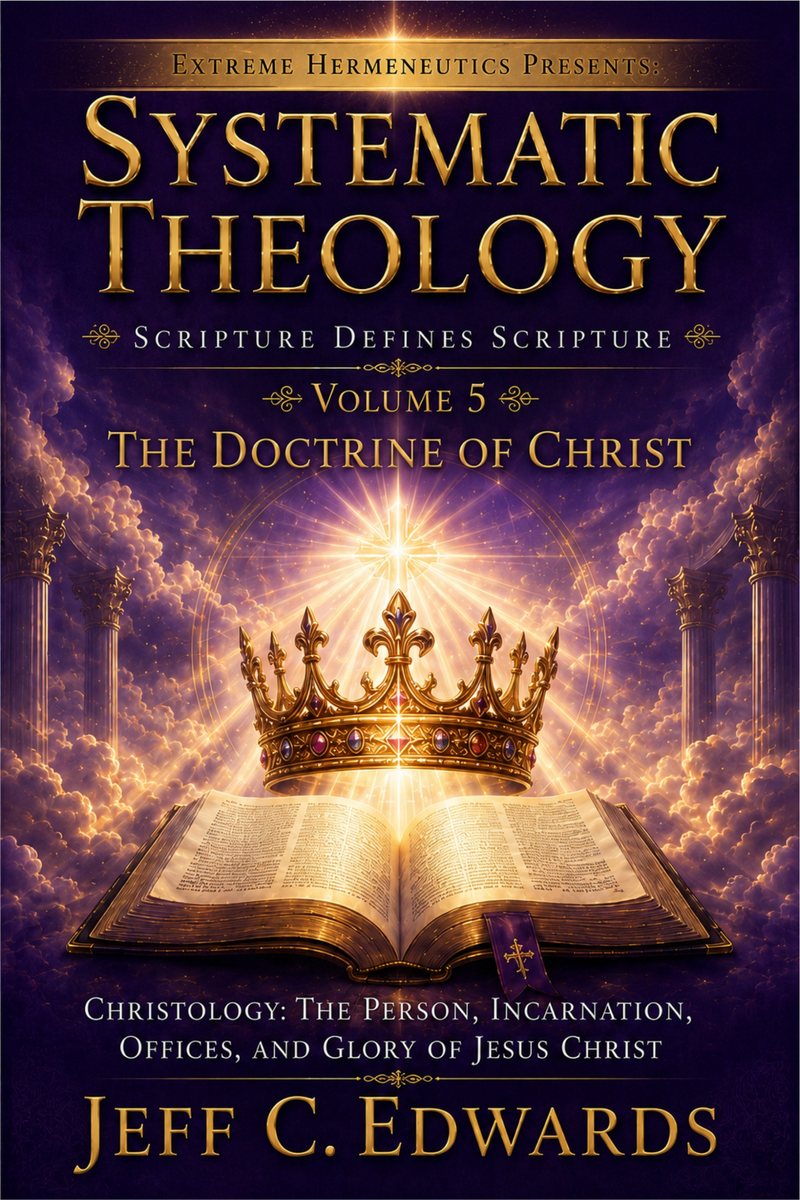
Few questions are more important than the one Jesus asked His disciples near Caesarea Philippi: “But whom say ye that I am?” (Matthew 16:15). The question came after the disciples had reported the opinions circulating among the people. Some thought Jesus was John the Baptist returned from the dead. Others identified Him with Elijah, Jeremiah, or one of the prophets. Those answers were not dismissive. They placed Jesus among honored figures in Israel’s history, yet every one of them was still far too small.
Matthew 16:16“Thou art the Christ, the Son of the living God.”
Peter answered, “Thou art the Christ, the Son of the living God” (Matthew 16:16). That confession reaches the heart of Christian faith. Jesus is not simply a teacher whose ideas may be admired, a prophet who pointed beyond Himself, a moral example added to religious history, or a spiritual figure each generation is free to reshape. Scripture gives Him a definite identity. He is the Christ, the Son of the living God.
The question of who Jesus is therefore cannot be settled by culture, philosophy, sentiment, tradition, or personal preference. Scripture must identify Him. The same Bible that promises Him before His birth, records His incarnation, testifies to His words and works, declares His death and resurrection, and reveals His exalted glory must be allowed to tell us who He is. When that whole witness is heard, Jesus stands before us as the eternal Son, truly God and truly man, Israel’s promised Messiah, the sinless Servant, Prophet, Priest, and King, the Lamb who was crucified, the Lord who rose bodily, the High Priest who now intercedes, and the King who will return and judge.
Jesus Christ Did Not Begin at Bethlehem
The birth of Jesus in Bethlehem is the beginning of His earthly human life, but it is not the beginning of His person. John deliberately opens his Gospel before Bethlehem, before David, before Abraham, before Adam, and before creation itself: “In the beginning was the Word, and the Word was with God, and the Word was God” (John 1:1).
Three truths stand together in that sentence. The Word already existed in the beginning. The Word was with God, establishing personal distinction. The Word was God, establishing full deity. John then places the Word unmistakably on the Creator side of the Creator-creature distinction: “All things were made by him; and without him was not any thing made that was made” (John 1:3). Everything that belongs to the category of created things came into existence through Him. The Word therefore cannot Himself be a created being.
Paul gives the same testimony concerning Christ: “For by him were all things created, that are in heaven, and that are in earth, visible and invisible” (Colossians 1:16). Thrones, dominions, principalities, and powers are included, and Paul concludes that “all things were created by him, and for him.” Christ is not the highest member of the created spiritual order. The spiritual order itself exists through Him. Paul continues, “And he is before all things, and by him all things consist” (Colossians 1:17). The Son not only created all things; He sustains them.
That truth gives the incarnation its astonishing depth. The world into which Jesus was born already belonged to Him. The stars above Bethlehem existed through Him. The sea He later calmed was His creation. The men who rejected Him depended upon His sustaining power for every breath they took. The Creator entered the creation He upheld.
The Word Was God
Christian confession must remain equally clear about Christ’s deity. John does not say merely that the Word possessed godlike qualities. He writes, “and the Word was God” (John 1:1). At the same time, Scripture remains uncompromisingly monotheistic: “Hear, O Israel: The LORD our God is one LORD” (Deuteronomy 6:4). The Bible does not present Jesus as another god beside the Father. It reveals one God, and within that confession the Son is fully divine.
Thomas stands before the risen Jesus and says, “My Lord and my God” (John 20:28). Jesus does not rebuke him for giving divine honor to a creature. Paul speaks of Christ coming from Israel “as concerning the flesh,” then identifies Him as “over all, God blessed for ever” (Romans 9:5). Hebrews calls the Son “the brightness of his glory, and the express image of his person” (Hebrews 1:3).
Christ also performs works Scripture associates with God. He creates, sustains, gives life, raises the dead, forgives sins, commands angels, and judges. When Jesus told the man sick of the palsy, “Son, thy sins be forgiven thee” (Mark 2:5), the scribes reasoned, “Who can forgive sins but God only?” (Mark 2:7). Their understanding of God’s authority to forgive was correct; their failure was that they did not recognize the One exercising that authority before them. Jesus then healed the man so that they might know “that the Son of man hath power on earth to forgive sins” (Mark 2:10).
The Son Is God, Yet He Is Not the Father
Confessing Christ as God does not mean confusing Him with the Father. Scripture reveals one God while also revealing real personal distinction between Father, Son, and Holy Ghost. The Father sends the Son. The Son prays to the Father. The Father loves the Son. The Spirit descends upon the Son. The Son sends the Spirit from the Father.
At Christ’s baptism, the Son stands in the water, the Spirit descends, and the Father speaks from heaven: “This is my beloved Son, in whom I am well pleased” (Matthew 3:17). These are not three gods, but neither are they one person merely appearing in different forms. Jesus says, “I and my Father are one” (John 10:30). The words preserve personal distinction—“I and my Father”—while affirming profound unity.
Christ’s obedience to the Father during His earthly mission therefore does not prove that He is a lesser deity. The eternal Son humbled Himself, took true humanity, and obeyed in the saving mission He willingly undertook. Personal order within the revealed life and work of Father, Son, and Spirit must not be turned into inequality of divine nature.
The title Son of God likewise does not mean that Christ was created. Human sons begin after their fathers, but creaturely relationships cannot simply be projected onto God. Scripture says that God “sent forth his Son, made of a woman, made under the law” (Galatians 4:4). The Son existed to be sent before He was born of the woman. Jesus speaks of the glory He possessed with the Father “before the world was” (John 17:5), and of the Father’s love for Him “before the foundation of the world” (John 17:24). His Sonship did not begin at Bethlehem.
The Word Was Made Flesh
John moves from the eternal Word to the incarnation with one of Scripture’s greatest declarations: “And the Word was made flesh, and dwelt among us” (John 1:14). The Son did not merely appear human. He became truly man. His humanity was not a vision, costume, or temporary disguise. Jesus was born, grew, hungered, thirsted, became weary, slept, wept, suffered, bled, and died.
Luke says, “And Jesus increased in wisdom and stature, and in favour with God and man” (Luke 2:52). John shows Him weary beside the well. The Gospels show Him sleeping in a ship, eating with others, grieving at Lazarus’s tomb, and enduring the anguish of Gethsemane. None of these realities diminishes His deity. They establish the truth of His humanity.
The virgin birth belongs to this same doctrine. Matthew connects Jesus’ birth with Isaiah’s promise: “Behold, a virgin shall be with child, and shall bring forth a son, and they shall call his name Emmanuel” (Matthew 1:23). Matthew explains the name as “God with us.” The child truly born into human history is Immanuel.
Scripture therefore does not present two persons cooperating in Jesus, one divine and one human. Neither does it present a mixture that becomes something neither fully divine nor fully human. Paul writes, “For in him dwelleth all the fulness of the Godhead bodily” (Colossians 2:9). The one Jesus Christ is truly God and truly man. We cannot explain every mystery of the incarnation, but Scripture gives enough to confess it faithfully.
The same Christ who became hungry multiplied bread. The One who slept in the ship commanded the sea. The One who wept beside Lazarus’s grave called Lazarus out of it. The One who was crucified is called “the Lord of glory” (1 Corinthians 2:8). His humanity is real, His deity is undiminished, and His person is one.
Jesus Is Israel’s Promised Messiah
Jesus did not appear detached from Israel, the covenants, the prophets, or the promises. The Old Testament moves toward Him through increasingly specific lines of expectation. He is the promised Seed of the woman, the Seed of Abraham, the royal Son through Judah, the Son of David, the righteous Branch, the Servant of the LORD, the Prophet like unto Moses, and the Son of Man who receives dominion and a kingdom.
Matthew opens by identifying Him as “Jesus Christ, the son of David, the son of Abraham” (Matthew 1:1). Gabriel tells Mary that “the Lord God shall give unto him the throne of his father David” (Luke 1:32). These are not ornamental titles. Jesus stands within the promises God made to Israel, and His coming demonstrates God’s faithfulness to those promises.
Paul holds Christ’s Israelite humanity and deity together when he says that from Israel, “as concerning the flesh Christ came, who is over all, God blessed for ever” (Romans 9:5). Jesus Himself told the Samaritan woman, “salvation is of the Jews” (John 4:22). That does not mean Jewish ethnicity saves; Scripture is clear that Jew and Gentile alike need Christ. It means the promises, covenants, Scriptures, and Messiah through whom salvation comes were entrusted through Israel according to God’s purpose.
Jesus later pressed the Pharisees with this same identity question: “What think ye of Christ? whose son is he?” They answered, “The Son of David” (Matthew 22:42). Their answer was true, but incomplete. Jesus then appealed to Psalm 110, where David calls the Messiah Lord: “If David then call him Lord, how is he his son?” (Matthew 22:45). He is truly David’s descendant according to the flesh, yet He is also David’s Lord.
Jesus Was Without Sin
Christ’s true humanity does not mean He shared mankind’s moral corruption. Scripture repeatedly declares His sinlessness. Peter writes, “Who did no sin, neither was guile found in his mouth” (1 Peter 2:22). Paul says Christ “knew no sin” (2 Corinthians 5:21). Hebrews calls Him “holy, harmless, undefiled, separate from sinners” (Hebrews 7:26).
His temptation was nevertheless real. Hebrews says that He “was in all points tempted like as we are, yet without sin” (Hebrews 4:15). Temptation did not require inward corruption. Christ encountered real testing and remained perfectly obedient.
His entire incarnate life was faithful to the Father. Where Adam disobeyed, Christ obeyed. Where Israel failed, Christ remained faithful. Where every sinner falls short, Jesus fulfilled righteousness. Paul says, “He humbled himself, and became obedient unto death, even the death of the cross” (Philippians 2:8).
The Savior who bears the sins of others has no sin of His own.
Jesus Is Prophet, Priest, and King
Scripture reveals Christ through several offices that belong together in the one person of the Messiah. Moses told Israel, “The LORD thy God will raise up unto thee a Prophet from the midst of thee, of thy brethren, like unto me; unto him ye shall hearken” (Deuteronomy 18:15). Jesus is that promised Prophet, yet He is greater than every prophet before Him because He does not merely bring words from God. He is the eternal Word made flesh and the perfect revealer of the Father.
He is also Priest. Psalm 110 declares, “Thou art a priest for ever after the order of Melchizedek” (Psalm 110:4). Hebrews develops His priesthood at length: He represents His people, offers Himself, enters the heavenly sanctuary, and continues in an unchangeable priesthood. Paul writes, “For there is one God, and one mediator between God and men, the man Christ Jesus” (1 Timothy 2:5). His mediatorship depends upon who He is. The One who brings man to God is Himself truly God and truly man.
Christ is also the promised King. Gabriel announced that He would receive David’s throne. Daniel saw the Son of Man receiving “dominion, and glory, and a kingdom, that all people, nations, and languages, should serve him” (Daniel 7:14). Revelation names Him “KING OF KINGS, AND LORD OF LORDS” (Revelation 19:16). His kingship cannot be reduced to an inward religious feeling. Scripture presents real authority, real dominion, real nations, and a reign that will not fail.
These offices must not be pulled apart. The Prophet who reveals God is also the Priest who offers Himself and the King who will reign.
Jesus Is the Servant, Shepherd, Bridegroom, and Head
Isaiah’s Servant gives another essential line of revelation. He brings Jacob back to God, becomes a light to the Gentiles, suffers rejection, bears sin, and is afterward exalted. Isaiah writes, “He was wounded for our transgressions, he was bruised for our iniquities” (Isaiah 53:5). The suffering of Messiah was not a failure of His mission. Scripture had promised both suffering and glory.
Other titles reveal Christ’s relationship to His people. He says, “I am the good shepherd: the good shepherd giveth his life for the sheep” (John 10:11). The Shepherd knows, calls, leads, protects, and gives Himself for His sheep. Scripture also presents Him as Bridegroom, expressing His covenant love and claim upon His people. Paul calls Him “the head of the body, the church” (Colossians 1:18). Christ does not merely inspire the church; He owns and governs it.
These images add richness without dividing His identity. The Shepherd is Lord. The Bridegroom is King. The Head of the church is also the Creator of all things.
Jesus Is the Lamb Who Gave His Life
John the Baptist saw Jesus and announced, “Behold the Lamb of God, which taketh away the sin of the world” (John 1:29). The title gathers the sacrificial language of Scripture into the person and mission of Christ. Jesus did not merely teach and then suffer an unfortunate death. His death belonged to the mission for which He came.
He said, “The Son of man came not to be ministered unto, but to minister, and to give his life a ransom for many” (Matthew 20:28). Paul later summarizes the gospel by saying, “Christ died for our sins according to the scriptures” (1 Corinthians 15:3).
The One dying is no ordinary man. He is the sinless Son, Israel’s Messiah, the Lord of glory, the suffering Servant, the Lamb of God, and the Priest who offers Himself. The identity of Christ gives immeasurable weight to the work of Christ. A diminished Christ inevitably produces a diminished understanding of the cross.
The Crucified Christ Rose Bodily
Christian faith does not end with the death of Jesus. Paul continues his gospel summary by saying that Christ “was buried, and that he rose again the third day according to the scriptures” (1 Corinthians 15:4).
The resurrection was not merely the survival of Jesus’ teaching or the continuation of His influence in the lives of His followers. The tomb was empty, and the risen Christ appeared bodily. Jesus told His disciples, “Handle me, and see; for a spirit hath not flesh and bones, as ye see me have” (Luke 24:39). He showed His wounds, ate in their presence, and appeared repeatedly to witnesses.
The same Jesus who died was raised, yet He was raised beyond the power of death. His resurrection vindicates Him, demonstrates His victory, guarantees the resurrection hope of His people, and leads into His exaltation. Christians therefore do not merely believe in a Christ who once lived.
They confess a Christ who lives now.
Jesus Is Exalted and Ministering Now
After His resurrection, Jesus ascended bodily into heaven. Acts records, “While they beheld, he was taken up; and a cloud received him out of their sight” (Acts 1:9). Scripture then presents Him seated at the right hand of God, exalted above principalities and powers.
Paul writes, “Wherefore God also hath highly exalted him, and given him a name which is above every name” (Philippians 2:9), leading to the confession “that Jesus Christ is Lord, to the glory of God the Father” (Philippians 2:11). His exaltation does not mean He became divine after the resurrection. The One exalted is the same Son who humbled Himself, the One who was already “in the form of God” (Philippians 2:6).
The risen Christ is also actively ministering for His people. Hebrews says, “he ever liveth to make intercession for them” (Hebrews 7:25). John writes, “If any man sin, we have an advocate with the Father, Jesus Christ the righteous” (1 John 2:1). His sacrifice is finished and never needs repeating, but His life and priestly ministry continue.
The church does not have only the memory of a Savior who acted long ago. It has a living Lord, High Priest, Advocate, and Head.
Jesus Will Return and Judge
At His ascension the angels told the disciples, “This same Jesus, which is taken up from you into heaven, shall so come in like manner as ye have seen him go into heaven” (Acts 1:11). The wording is deliberate: this same Jesus. His return is not merely the spread of Christian influence or the arrival of a spiritual principle. The same risen Lord who ascended will return.
Jesus says, “For the Son of man shall come in the glory of his Father with his angels” (Matthew 16:27). The suffering Son of Man will appear in glory. The rejected King will be publicly revealed, and the One before whom men once sat in judgment will Himself judge.
Jesus says, “For the Father judgeth no man, but hath committed all judgment unto the Son” (John 5:22). Paul told the Athenians that God “hath appointed a day, in the which he will judge the world in righteousness by that man whom he hath ordained” (Acts 17:31).
The gospel therefore does not present Jesus as one religious option among many. Every person will finally answer to Him. The One who now calls sinners to salvation is also the righteous Judge before whom every creature will stand.
There Is No Other Christ
Paul warned the Corinthians about receiving “another Jesus, whom we have not preached” (2 Corinthians 11:4). That warning remains necessary because false versions of Jesus are not always openly hostile to Christianity. Some are praised warmly.
A merely human Jesus may be admired for His ethics while His deity is denied. A political Jesus may be recruited for an ideology. A sentimental Jesus may be welcomed because He never judges or commands. A mystical Jesus may be detached from the historical Messiah of Israel. A created Jesus may receive great honor while still being denied the glory Scripture gives Him. A crossless Jesus may promise inspiration or improvement without dealing with guilt and sin.
None of these is the whole Christ revealed in Scripture.
The church has no authority to redesign Jesus according to the preferences of an age. He is not clay in the hands of theologians and not a blank figure upon whom cultures may project their ideals. He must be received as God has revealed Him.
Whom Say Ye That I Am?
The question Jesus asked His disciples still stands: “But whom say ye that I am?” (Matthew 16:15).
Scripture gives the answer across the whole counsel of God. Jesus is the eternal Word, God the Son, the Creator and Sustainer of all things, the only begotten Son of the Father, the promised Seed, Son of David, Son of Man, and Messiah. He is Immanuel, God with us—true God and true man in one person. He is without sin. He is Prophet, Priest, King, Mediator, Servant, Shepherd, Bridegroom, and Head. He is the Lamb who was crucified, the Lord who rose bodily, the exalted High Priest who intercedes, the King who will return, and the Judge of all.
No single title exhausts Him, and no single passage contains the whole doctrine. Scripture reveals the whole Christ through the whole counsel of God.
Peter’s confession therefore remains the church’s confession: “Thou art the Christ, the Son of the living God” (Matthew 16:16). Thomas, standing before the risen Lord, expresses it with equal force: “My Lord and my God” (John 20:28).
That is the Jesus Christ Scripture reveals, the Christ the church must proclaim, and the Lord before whom every knee will finally bow.