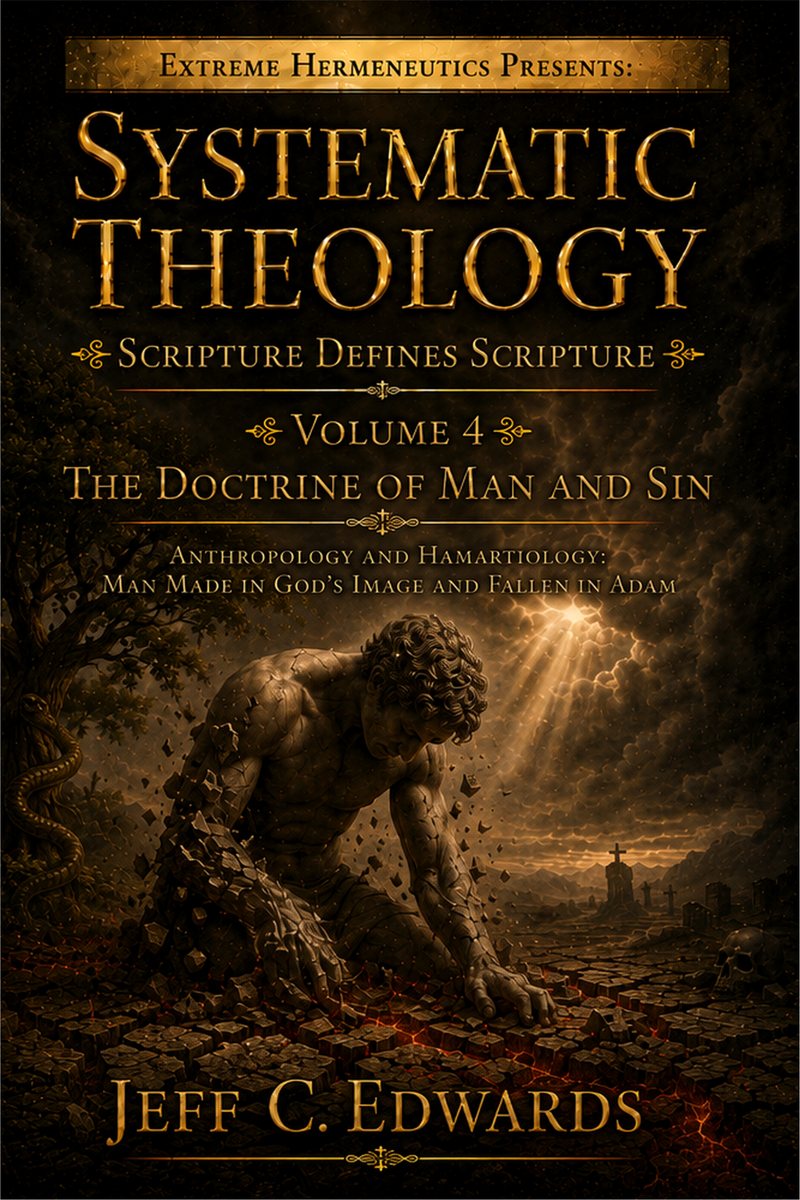
Few biblical words are more familiar than sin, and few are more easily reduced.
Romans 3:23“For all have sinned, and come short of the glory of God.”
Sin may be described as making mistakes, hurting people, breaking religious rules, failing to become our best selves, acting against our values, or choosing what is unhealthy. Some of those descriptions may touch consequences or outward expressions of sin, but none reaches deeply enough to define what Scripture means. A person can make a mistake without sinning. A person can suffer emotional brokenness without being morally guilty for the suffering. Human weakness is not automatically wickedness. Ignorance, limitation, grief, temptation, trauma, and bodily frailty all belong to life in a fallen world, but Scripture does not simply identify them all as sin.
The Bible begins somewhere more serious.
Sin is against God.
David understood this after his adultery with Bathsheba, his deception, and the arranged death of Uriah. His actions had harmed real people and brought terrible consequences into his household and kingdom, yet when he confessed his guilt before the Lord, he said:
“Against thee, thee only, have I sinned, and done this evil in thy sight” (Psalm 51:4).
David was not denying that he had sinned against Uriah, Bathsheba, his family, and Israel. He was recognizing the deepest court in which every sin is judged. Sin is evil because it is committed in God’s world, against God’s order, before God’s face. Murder is evil because human beings bear God’s image and God forbids murder. Adultery is evil because God established marriage and commands faithfulness. Lying is evil because the God of truth forbids falsehood. Idolatry is evil because the creature gives to something else the worship that belongs to God alone.
This is why Scripture must define sin. Fallen man cannot safely make himself the final judge of what sin is, because the sinner has an interest in making sin smaller. He can rename what God condemns, excuse what God exposes, and create moral categories spacious enough to preserve the things he does not want to surrender. God’s Word does not allow the accused to rewrite the law of the Judge.
To understand sin, then, we must listen to the many ways Scripture describes it.
Sin Begins With the Refusal of God
Genesis 3 gives the first human sin, and the sequence is revealing. God had already given Adam and Eve life, abundance, work, companionship, dominion, and a garden filled with provision. He had also given one prohibition:
“Of the tree of the knowledge of good and evil, thou shalt not eat of it” (Genesis 2:17).
The serpent attacked the Word before the fruit was taken. “Yea, hath God said...?” (Genesis 3:1). Then came contradiction: “Ye shall not surely die” (Genesis 3:4). The temptation called the woman to judge God’s command, distrust His warning, question His goodness, and receive another voice in place of His.
The hand reaching for the fruit was therefore the visible act of a deeper rebellion. God had spoken, and man refused to remain beneath His Word.
That pattern helps explain the entire doctrine of sin. Sin is more than violating an impersonal moral code. God is not merely a standard hanging above creation. He is the living Creator, Lord, Judge, and giver of every good thing. Sin rejects His rightful authority. It treats His command as negotiable, His goodness as questionable, His warning as exaggerated, or His gifts as insufficient.
The first sin occurred in a garden of abundance, not in a place of divine neglect. Adam and Eve were not starved into rebellion. They sinned surrounded by goodness. Their disobedience was therefore ingratitude as well as transgression. They received everything from God and then acted as though life could be better outside His rule.
Sin still carries that character. It may be loud rebellion or quiet self-rule. It may curse God openly or simply reserve one protected area of life in which His Word will not be allowed to govern. The outward forms differ, but the creature has placed his own judgment over the Creator.
Sin Is Transgression
John gives one of Scripture’s clearest definitions:
“Whosoever committeth sin transgresseth also the law: for sin is the transgression of the law” (1 John 3:4).
Transgression crosses a boundary God has established. It says no where God says yes or yes where God says no. In Eden, the physical action may have appeared small: a piece of fruit was taken and eaten. The moral significance came from the fact that God had spoken concerning it. The command made the boundary clear. Adam crossed it.
This protects us from measuring sin only by the amount of immediate damage we can see. Human beings often rank actions according to obvious social consequences, and Scripture certainly recognizes differences in seriousness, knowledge, intent, and judgment. Yet an act does not become morally safe simply because its earthly consequences appear minor. If God has commanded, His authority matters.
Transgression also shows why human limitation is not itself sin. Adam was finite before the fall. He did not know everything. He depended upon God. He had physical needs and creaturely limits. None of those things made him guilty. Finitude is not rebellion. Dependence is not evil. Creatureliness is not a defect.
Adam sinned when he disobeyed.
That distinction remains important for people who confuse weakness with wickedness. A tired body is not necessarily sinful. Grief is not sin simply because it hurts. A person may be limited, wounded, inexperienced, confused, or tempted without having committed moral evil. Scripture takes human weakness seriously without calling every weakness rebellion.
Sin enters when the creature turns against the will of God.
Sin Is Lawlessness of Heart
Transgression emphasizes crossing a known boundary. Scripture also exposes something deeper: the desire to live without God’s rule.
Human rebellion does not always wait for a visible command to break. There is a lawless disposition that resents authority itself. The sinner does not merely want a different rule; at the deepest level he wants the right to be his own ruler.
That is why Isaiah says:
“All we like sheep have gone astray; we have turned every one to his own way” (Isaiah 53:6).
The phrase “his own way” reveals the problem. Sin does not have to look identical in every person. One person pursues pleasure, another power, another approval, another wealth, another religious pride. The directions vary, but all have turned from the Lord toward a path of their own choosing.
This helps explain why moral respectability cannot by itself prove righteousness. A person may avoid many scandalous sins and still live fundamentally for himself. He may be disciplined, successful, admired, generous, or religious while retaining the settled assumption that he belongs to himself.
Scripture begins elsewhere:
“Know ye that the LORD he is God: it is he that hath made us, and not we ourselves” (Psalm 100:3).
The creature belongs to the Creator. Sin resists that ownership.
Sin Is Iniquity
Scripture also speaks frequently of iniquity. The word carries the idea of moral crookedness, distortion, or perversity. Sin does not merely cross a line; it bends what God made straight.
This is visible throughout fallen life. Love can be bent into lust or possessiveness. Authority can become tyranny. Freedom can become self-will. Intelligence can become pride. Strength can become oppression. Beauty can become vanity. Sexual desire can be removed from the covenant order God gave it. Justice can become revenge. Mercy can be distorted into approval of evil. Religion itself can become hypocrisy, self-righteousness, manipulation, or performance.
The created things being misused may still be good in themselves. The problem is what the sinful heart does with them.
David therefore prays:
“Wash me throughly from mine iniquity, and cleanse me from my sin” (Psalm 51:2).
He does not ask only for consequences to disappear. He knows something within him has been twisted. His confession reaches beneath the outward act to the moral corruption from which such acts arise.
This is one reason behavioral reform alone cannot solve the human problem. A man may stop one outward sin while the same inward crookedness finds another expression. Pride can survive the abandonment of drunkenness. Self-righteousness can grow alongside religious discipline. Lust can change its object without surrendering its rule. The sinner needs more than rearranged behavior.
He needs cleansing.
Sin Is Rebellion
Isaiah begins his prophecy with the Lord saying:
“I have nourished and brought up children, and they have rebelled against me” (Isaiah 1:2).
Rebellion brings the personal nature of sin into view. God is not an abstract moral principle. He has created, provided, spoken, warned, shown mercy, and given good gifts. Sin rises against Him.
That makes rebellion especially ugly when it occurs in the midst of goodness. Israel had received covenant privilege, deliverance, law, worship, and provision, yet repeatedly turned from the Lord. Adam received Eden and rebelled. The prodigal son received the father’s house and demanded life away from him.
The prodigal later understood the true nature of what he had done:
“Father, I have sinned against heaven, and before thee” (Luke 15:18).
Rebellion may appear openly in blasphemy or deliberate defiance, but it can also take respectable forms. Selective obedience is rebellion when the selection belongs to us rather than God. Religious activity can coexist with rebellion if a person honors God publicly while withholding the heart. Delayed obedience may be rebellion when delay is simply a polite method of refusal.
Saul learned this painfully. When he defended his partial obedience concerning Amalek, Samuel answered:
“Behold, to obey is better than sacrifice, and to hearken than the fat of rams. For rebellion is as the sin of witchcraft, and stubbornness is as iniquity and idolatry” (1 Samuel 15:22–23).
Religious sacrifice could not cover a will that had refused the Lord’s command.
Sin Is Unbelief
At the root of the fall was unbelief. God said one thing, and the serpent said another. Adam and Eve acted upon the serpent’s word.
Unbelief is more than intellectual uncertainty. Scripture does not condemn every question, every struggle to understand, or every moment of weakness in faith. Biblical people ask God questions, cry out in confusion, and seek understanding. Unbelief becomes morally culpable when God’s testimony is refused because the creature will not trust the One who speaks.
Hebrews repeatedly connects Israel’s wilderness rebellion with unbelief:
“So we see that they could not enter in because of unbelief” (Hebrews 3:19).
They had seen God’s works. They had experienced deliverance from Egypt. They had received manna, guidance, and covenant revelation. Yet when God called them to trust Him, they hardened themselves.
Sin often grows from this same root. God says He is good, but the sinner believes forbidden desire will satisfy more deeply. God says vengeance belongs to Him, but the offended person believes retaliation is safer. God commands truth, but the liar believes deception will protect him. God establishes sexual boundaries, but the sinner believes obedience will deprive him. God calls His people to generosity, but greed says security is found in keeping more.
Behind many acts of disobedience stands a false belief about God, ourselves, or the thing desired.
The sinner receives another word over God’s Word.
Sin Is Idolatry
Romans 1 reveals that sin is fundamentally connected to worship. Fallen man:
“Changed the glory of the uncorruptible God into an image made like to corruptible man” (Romans 1:23).
Then Paul says:
“Who changed the truth of God into a lie, and worshipped and served the creature more than the Creator” (Romans 1:25).
Man does not cease being a worshiper when he turns from God. His worship is redirected. Trust, love, fear, hope, devotion, sacrifice, and obedience begin flowing toward something created.
An idol may be carved from wood or stone, but Scripture’s theology of idolatry reaches much farther. A person can give ultimate allegiance to money, pleasure, power, reputation, family, nation, beauty, success, intellect, control, political identity, ministry, or self. A good created thing becomes idolatrous when it receives the devotion that belongs to the Creator.
This explains why some sins feel almost impossible for people to surrender. The issue is not merely that they enjoy the behavior. Something deeper may be worshiped through it. The person fears losing approval, control, pleasure, identity, security, or status. The idol promises what God alone should be trusted to give.
Sin therefore cannot be reduced to bad behavior. The heart has an altar.
The first commandment addresses that altar:
“Thou shalt have no other gods before me” (Exodus 20:3).
Sin Falls Short of the Glory of God
Paul gives one of Scripture’s broadest statements:
“For all have sinned, and come short of the glory of God” (Romans 3:23).
Human beings prefer to measure themselves against other human beings. A man points to someone more immoral and concludes he is basically righteous. He has never committed murder. He provides for his family. He pays his bills. He is not as dishonest as others. He may even be religious.
But other sinners are not the final standard.
God is.
Man was created in God’s image to live before Him, reflect His righteous order, worship Him, obey Him, love Him, and glorify Him. Sin is falling short of that created purpose.
This exposes the inadequacy of defining sin only as shocking wrongdoing. A respectable sinner still comes short of the glory of God. He does not love God with all his heart, soul, mind, and strength. He does not love his neighbor perfectly. His motives are mixed. His gratitude is incomplete. His worship wanders. His thoughts are not always pure. His obedience is not whole.
The doctrine of sin therefore shuts the door on self-righteous comparison.
“There is none righteous, no, not one” (Romans 3:10).
The question is not whether one sinner is morally better than another in some earthly respects. Scripture certainly recognizes differences in conduct and degrees of evil. The question before God is whether any member of Adam’s race meets the righteous glory for which man was made.
All have come short.
Sin Is Unrighteousness
John writes:
“All unrighteousness is sin” (1 John 5:17).
God is righteous. His judgments are righteous. His ways are righteous. Sin therefore includes whatever departs from the standard of righteousness God Himself establishes.
This is important because human cultures can normalize unrighteousness. Laws may protect evil. Communities may celebrate what Scripture condemns. A generation may develop moral language that makes obedience sound hateful and rebellion sound virtuous.
Changing social approval does not change God’s judgment.
Isaiah warns:
“Woe unto them that call evil good, and good evil” (Isaiah 5:20).
Human beings do not create righteousness by consensus. Neither majority vote, personal sincerity, cultural development, nor political power can make evil righteous before God.
The Creator defines what is right.
Sin Includes What Comes From the Heart
Jesus will not allow sin to remain merely external. He says:
“For from within, out of the heart of men, proceed evil thoughts, adulteries, fornications, murders, Thefts, covetousness, wickedness, deceit, lasciviousness, an evil eye, blasphemy, pride, foolishness” (Mark 7:21–22).
The list moves inward and outward without separating the two. Evil thoughts, pride, covetousness, deceit, sexual sin, theft, and murder all emerge from a heart already disordered.
This is why Christ intensifies the moral issue beyond outward conformity. A man may refrain from physical adultery while nurturing lust. He may avoid murder while harboring hatred. He may never steal money yet covet what belongs to another. He may say religious words while seeking human praise.
Sin involves thought, desire, motive, speech, and deed.
That does not mean temptation itself is sin. Jesus was “in all points tempted like as we are, yet without sin” (Hebrews 4:15). Temptation presents evil to the mind and desire; sin occurs when the heart receives, cherishes, chooses, or acts upon what is contrary to God. James describes desire conceiving and bringing forth sin (James 1:14–15).
This distinction matters pastorally. A believer may be horrified by an unwanted temptation and assume its mere presence proves he has already committed the full sin. Scripture gives a more careful account. Temptation is dangerous and must be resisted, but being tempted is not identical to consenting to the temptation.
Christ was tempted.
Christ never sinned.
Sin Includes Words
Scripture takes speech far more seriously than people often do.
Jesus says:
“Every idle word that men shall speak, they shall give account thereof in the day of judgment” (Matthew 12:36).
James describes the tongue as capable of enormous destruction. Lies, slander, gossip, false witness, cruel speech, corrupt communication, blasphemy, manipulation, flattery, boasting, and deception all belong within the biblical doctrine of sin.
Words matter because they reveal and affect the heart. Jesus says:
“Out of the abundance of the heart the mouth speaketh” (Matthew 12:34).
A theology of sin that focuses only on dramatic physical acts will miss much of what Scripture exposes. A person may consider himself morally respectable while using his tongue to destroy reputations, deceive customers, manipulate family members, spread bitterness, or wound those under his authority.
God hears words.
Sin Includes Omission
Sin is not only doing what God forbids. It can also be failing to do what God requires.
James writes:
“Therefore to him that knoweth to do good, and doeth it not, to him it is sin” (James 4:17).
This greatly enlarges the biblical picture.
A man may congratulate himself because he did not commit some scandalous evil while ignoring the good God placed before him. He may refuse to help when he has the ability. He may withhold forgiveness, justice, mercy, provision, truth, protection, encouragement, or obedience. He may know what faithfulness requires and simply refuse to act.
The priest and Levite in Christ’s account of the wounded man did not beat him. They passed by him.
Omission can be sin because God does not call His creatures merely to avoid evil. He calls them to love Him and their neighbor.
This is another reason no one can establish righteousness simply by producing a list of crimes he has avoided. God’s law requires positive love, justice, mercy, faithfulness, truth, and worship.
Failure to render what God requires is also moral failure.
Sin May Be Done in Ignorance or Presumption
Scripture recognizes differences in knowledge and intent. The Law of Moses made distinctions involving sins committed through ignorance and sins committed presumptuously. Jesus also taught that greater light brings greater accountability.
He said:
“And that servant, which knew his lord's will, and prepared not himself, neither did according to his will, shall be beaten with many stripes” (Luke 12:47).
Ignorance does not automatically make wrong right, but knowledge matters in judgment. The person who deliberately chooses evil against clear light displays a hardened form of rebellion.
This helps us avoid two opposite errors. We should not pretend every sin carries exactly the same circumstances, knowledge, damage, or measure of accountability. Scripture itself makes distinctions. Yet we should not turn those distinctions into excuses by pretending lesser knowledge makes sin harmless.
The Judge knows perfectly.
He knows what was understood, what was hidden, what was resisted, what was done deliberately, and what opportunities for repentance were despised.
Human courts cannot see that fully.
God can.
Sin Makes Man Guilty Before God
Sin does not merely cause guilty feelings.
It creates guilt.
Those are not the same thing.
A conscience may accuse someone where God has not condemned him. A person may feel crushing shame because of abuse committed against him rather than sin committed by him. Another person may feel almost no guilt while practicing serious evil because his conscience has become hardened.
Feeling is therefore not the final measure.
God’s judgment is.
Paul writes:
“Now we know that what things soever the law saith, it saith to them who are under the law: that every mouth may be stopped, and all the world may become guilty before God” (Romans 3:19).
That is courtroom language. Sin leaves man answerable before the Judge.
This is why self-forgiveness, positive thinking, distraction, or moral rebranding cannot finally remove guilt. If guilt exists before God, only God can provide the answer to it.
The sinner does not merely need to feel forgiven.
He needs to be forgiven.
Sin Is Both Personal and Universal
Scripture refuses two opposite evasions.
The first blames sin entirely upon the environment, society, parents, biology, temptation, or other people. These influences can be real and powerful, but they do not erase personal responsibility. The sinner also chooses, speaks, desires, acts, suppresses truth, and refuses God.
The second treats every person as though he begins morally untouched by the fall and becomes sinful only through imitation. Scripture goes deeper.
Paul writes:
“Wherefore, as by one man sin entered into the world, and death by sin” (Romans 5:12).
Later:
“For as by one man's disobedience many were made sinners” (Romans 5:19).
Adam’s sin is not merely the first bad example. Human beings are born into a fallen race under corruption and death. Yet inherited corruption does not erase personal guilt. Scripture holds Adam’s headship and individual responsibility together.
Men are fallen in Adam.
And men sin.
The universality is therefore complete:
“For all have sinned” (Romans 3:23).
No class escapes. Education does not remove sin. Poverty does not create innocence. Wealth does not create righteousness. Religious heritage cannot erase guilt. Political affiliation does not sanctify. Sincerity does not justify.
Every person needs grace.
Sin Corrupts the Whole Person
The Bible does not portray fallen man as fundamentally healthy with a few bad habits attached. Sin reaches mind, heart, desire, conscience, speech, body, worship, relationships, and will.
Jeremiah says:
“The heart is deceitful above all things, and desperately wicked: who can know it?” (Jeremiah 17:9).
Paul describes Gentiles as having “the understanding darkened” (Ephesians 4:18). Romans 1 describes men suppressing truth and becoming vain in their imaginations. Jesus identifies evil as proceeding from within the human heart.
This does not mean fallen people are as evil as they could possibly become. Scripture plainly shows common kindness, family affection, civil justice, generosity, craftsmanship, courage, and other genuine goods among people who are not redeemed. God restrains evil, gives common mercies, and preserves human society.
But none of those realities removes the deeper corruption of the sinner before God.
Man cannot cure this corruption by education alone. Better laws can restrain some evil, but they cannot create a new heart. Therapy may help people understand wounds, habits, and behaviors, but it cannot justify the guilty before God. Discipline can change patterns, but it cannot regenerate. Social reform may correct real injustices, but it cannot reconcile a sinner to his Creator.
The biblical diagnosis is deeper because the biblical remedy is greater.
Sin Enslaves
Jesus says:
“Whosoever committeth sin is the servant of sin” (John 8:34).
Sin does not merely stand outside a morally neutral person offering occasional bad choices. It deceives, masters, and binds. A person may begin believing he controls a sinful habit only to discover that the habit controls him. Appetite becomes master. Bitterness becomes identity. Lust shapes thought. Greed reorganizes priorities. Pride makes correction unbearable. Fear of man begins controlling truthfulness.
Paul asks:
“Know ye not, that to whom ye yield yourselves servants to obey, his servants ye are to whom ye obey?” (Romans 6:16).
This bondage does not remove responsibility. The sinner is not an innocent prisoner captured by a power he has always hated. He also yields, desires, excuses, loves darkness, and participates willingly in sin.
Scripture therefore presents fallen man as both responsible and enslaved.
That is why he needs deliverance, not merely advice.
Sin Brings Death
God warned Adam:
“In the day that thou eatest thereof thou shalt surely die” (Genesis 2:17).
Paul later interprets human history through that warning:
“Wherefore, as by one man sin entered into the world, and death by sin” (Romans 5:12).
And again:
“For the wages of sin is death” (Romans 6:23).
Death is not merely an unfortunate feature of existence with no moral connection to the fall. Scripture identifies it as the wages of sin and an enemy to be destroyed. Physical death, spiritual alienation, corruption, judgment, and ultimately the second death all belong within the terrible biblical horizon of sin.
This does not mean every individual suffering can be traced to a particular personal sin. Jesus explicitly rejected simplistic attempts to explain suffering that way. People may suffer because they live in a fallen world, because others sin against them, because bodies are mortal, or for reasons God has not revealed.
But the existence of death itself belongs to the world after sin.
The grave is not the final evidence that creation is meaningless.
It is evidence that something has gone terribly wrong.
Sin Is More Serious Than We Want It to Be
Human beings repeatedly attempt to make sin manageable.
If sin is only ignorance, then education should be enough. If it is only low self-esteem, encouragement should be enough. If it is only social dysfunction, reform should be enough. If it is only trauma, healing techniques should be enough. If it is only harmful habits, greater discipline should be enough.
Each of those approaches may address real aspects of human life. Education is good. Encouragement is good. Social reform can be necessary. Trauma should be treated compassionately. Discipline matters.
But none can carry the weight Scripture places upon sin.
Sin is transgression of God’s law, lawlessness of heart, iniquity of way, rebellion against the Lord, unbelief toward His Word, idolatry of the creature, falling short of His glory, unrighteousness before His standard, uncleanness before His holiness, debt before His justice, disobedience to His command, omission of known good, corruption within, bondage under sin, and evil done in His sight. Volume 4 deliberately gathers these biblical categories because no single shallow definition can expose the whole problem.
The doctrine is severe because the disease is severe.
But Scripture does not expose sin in order to leave sinners without hope.
Sin Explains Why We Need Christ
The depth of sin tells us why salvation cannot be shallow.
If man is guilty, he needs forgiveness and justification.
If he is unclean, he needs cleansing.
If he is enslaved, he needs redemption and deliverance.
If his heart is corrupt, he needs new life.
If he is alienated from God, he needs reconciliation.
If he is under death, he needs resurrection.
The angel announced concerning Jesus:
“Thou shalt call his name JESUS: for he shall save his people from their sins” (Matthew 1:21).
That statement makes little sense if sin is reduced to imperfection or unfortunate behavior. Christ did not come merely to improve human potential. He came to save sinners from the ruin Scripture has described.
Paul gathers the universality of sin and the grace of God in one movement. After saying, “For all have sinned, and come short of the glory of God,” he continues:
“Being justified freely by his grace through the redemption that is in Christ Jesus” (Romans 3:23–24).
The diagnosis is universal.
The answer is grace.
This is why Christians should never make sin smaller in an attempt to make the gospel more attractive. A smaller doctrine of sin does not produce a kinder gospel. It produces an unnecessary Savior.
Christ becomes precious when sin is allowed to be what Scripture says it is.
God Defines Sin—and God Provides the Remedy
So what is sin according to the Bible?
Sin is the creature refusing the God who made him. It crosses God's boundaries, bends His good order, rebels against His authority, distrusts His Word, gives His glory to created things, falls short of His righteous purpose, and brings real guilt before Him. It comes from the heart and appears in thought, desire, speech, action, and omission. It affects individuals and societies, corrupts the whole person, enslaves those who serve it, and pays death as its wages.
That is why no human being can define himself out of the problem.
We cannot rename sin until guilt disappears.
We cannot compare ourselves with worse sinners until we become righteous.
We cannot heal ourselves into justification.
We cannot discipline ourselves into new birth.
God must tell us what sin is.
And God must save us from it.
The same Scripture that says, “If we say that we have no sin, we deceive ourselves, and the truth is not in us” also says:
“If we confess our sins, he is faithful and just to forgive us our sins, and to cleanse us from all unrighteousness” (1 John 1:8–9).
The Bible's doctrine of sin is dark because sin is dark.
But God does not reveal the darkness so that sinners will admire their ruin.
He reveals it so that they will understand why they need the Light.