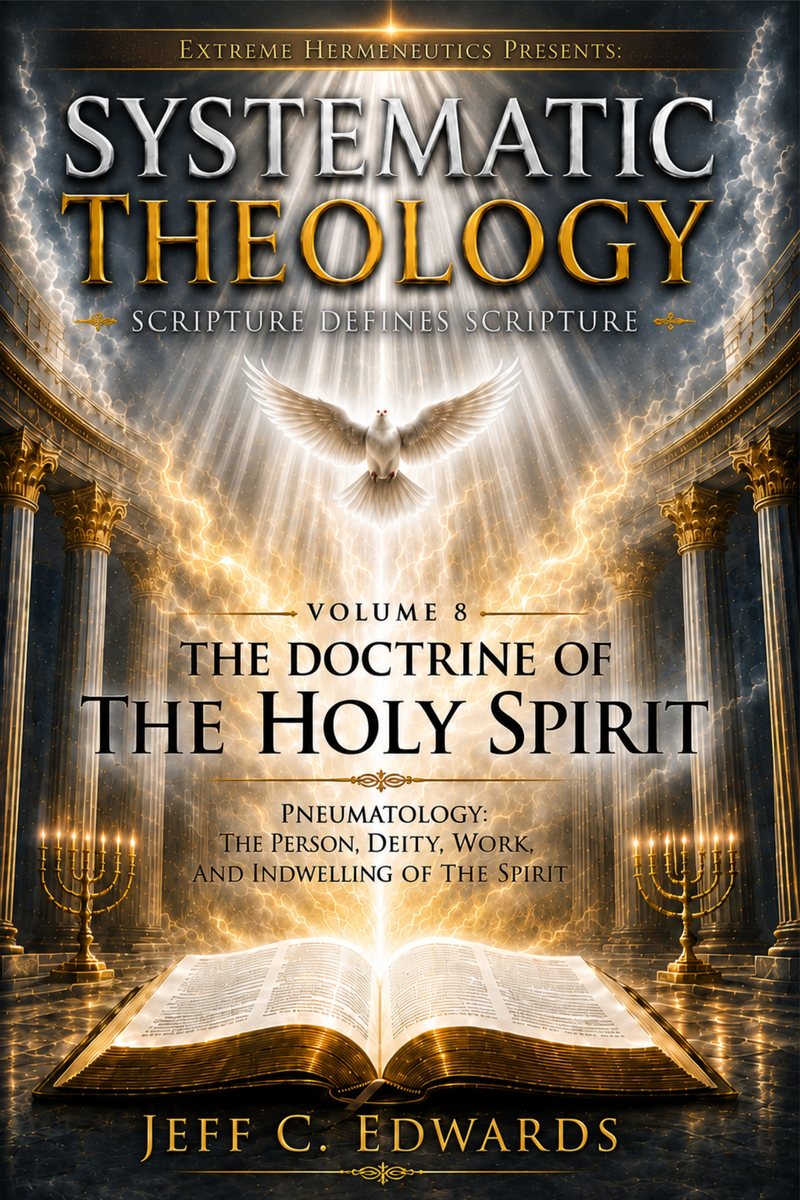
The Holy Spirit is sometimes spoken of as an experience, a feeling, or an impersonal power. Scripture speaks of Him as God: personal, holy, truthful, active, and always faithful to the Son He glorifies.
READ THE KEY PASSAGES
Begin with what
Scripture says.
John 16:13–14When he, the Spirit of truth, is come, he will guide you into all truth... He shall glorify me: for he shall receive of mine, and shall shew it unto you.
Romans 8:9Now if any man have not the Spirit of Christ, he is none of his.
Romans 8:14For as many as are led by the Spirit of God, they are the sons of God.
01
The Holy Spirit is God and a Person
Acts 5:3–4Why hath Satan filled thine heart to lie to the Holy Ghost... thou hast not lied unto men, but unto God.
The Spirit may be lied to, grieved, resisted, and obeyed. Acts identifies lying to the Holy Ghost with lying to God. He is not a force available for human use. Every claim about the Spirit must begin with the way Scripture reveals His person and deity.
Because He is personal and divine, the Spirit cannot be reduced to atmosphere, ability, or emotional intensity. Christians do not possess Him as a tool. They belong to God and are called to honor the Spirit whose holy presence cannot be separated from truth and obedience.
02
The Spirit gave the Word
2 Peter 1:21Holy men of God spake as they were moved by the Holy Ghost.
Holy men of God spoke as they were moved by the Holy Ghost. The Spirit never leads believers away from the Scriptures He inspired. He illumines the Word, brings its truth to bear, and guards the church from treating impressions or excitement as replacement revelation.
The Spirit’s work in illumination does not give a later message authority equal to Scripture. He opens the believer’s understanding to what God has spoken. Any claimed leading that contradicts Scripture, diminishes Christ, or excuses sin is not the work of the Spirit of truth.
03
The Spirit gives life
John 3:6That which is born of the Spirit is spirit.
The Spirit causes the new birth and belongs to every person who belongs to Christ. His work in salvation is not mere external encouragement. He gives life, unites believers to Christ, indwells them, and assures them that they are God’s children.
This means that the Christian life cannot be sustained by fleshly effort alone. The believer depends upon the Spirit for conviction, strength, comfort, prayer, and perseverance. That dependence does not produce passivity. It produces a life that seeks to walk according to the Word He gave.
04
The Spirit produces holiness and witness
Galatians 5:22–23But the fruit of the Spirit is love, joy, peace, longsuffering, gentleness, goodness, faith, Meekness, temperance.
The Spirit’s presence is not measured only by dramatic claims. Scripture directs attention to truth, Christ’s glory, holy character, love, obedience, prayer, and faithful witness. The fruit of the Spirit displays God’s work in an ordinary Christian life.
Gifts and experiences must be judged by this larger biblical picture. The Spirit does not draw attention away from Christ to human display. He glorifies the Son, builds the church in truth, and forms in God’s people the kind of character that reflects the holiness of God.
PUT IT INTO PRACTICE
Questions for further reading.
- 01
What shows that the Holy Spirit is personal and divine?
- 02
Why can the Spirit never contradict the written Word?
- 03
What fruit does Scripture connect with His work?
Read patiently. Let God’s Word speak.
The Holy Spirit glorifies Christ, inspired the Word, gives life, indwells believers, and forms holiness in them. A true doctrine of the Spirit makes the Christian more attentive to Scripture and more devoted to Christ.